Göreme Open Air Museum
Rock-cut churches and frescoes reveal a remarkable chapter of the region’s religious and artistic heritage.
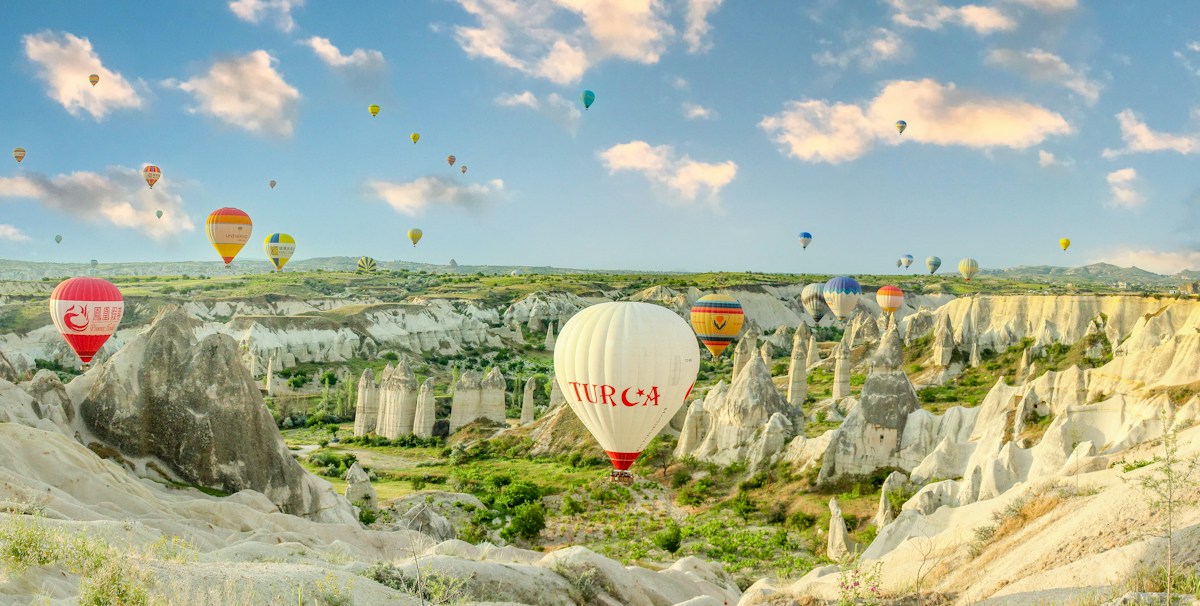
Fairy chimneys, carved rock and valleys illuminated by the first light make Cappadocia unforgettable. Discover the landscape on foot, pause in a village and bring cultural encounters into a journey shaped by the outdoors.
Plan a journey here ↗Cappadocia’s volcanic landscape became a place of settlement, worship and refuge because its soft rock could be carved. Rock-cut churches, monasteries and underground towns reveal centuries of human adaptation. Göreme’s heritage and the underground settlements of Derinkuyu and Kaymaklı make the region as compelling historically as it is visually.
Avanos pottery connects the red clay of the Kızılırmak to a living craft tradition. Stone houses, carpets and the vineyards around the towns add different textures to a visit. Cappadocia is a cultural region across several provinces, not a single city; this guide uses Nevşehir as the population and climate reference for its central visitor area.
Discover the official tourism guide ↗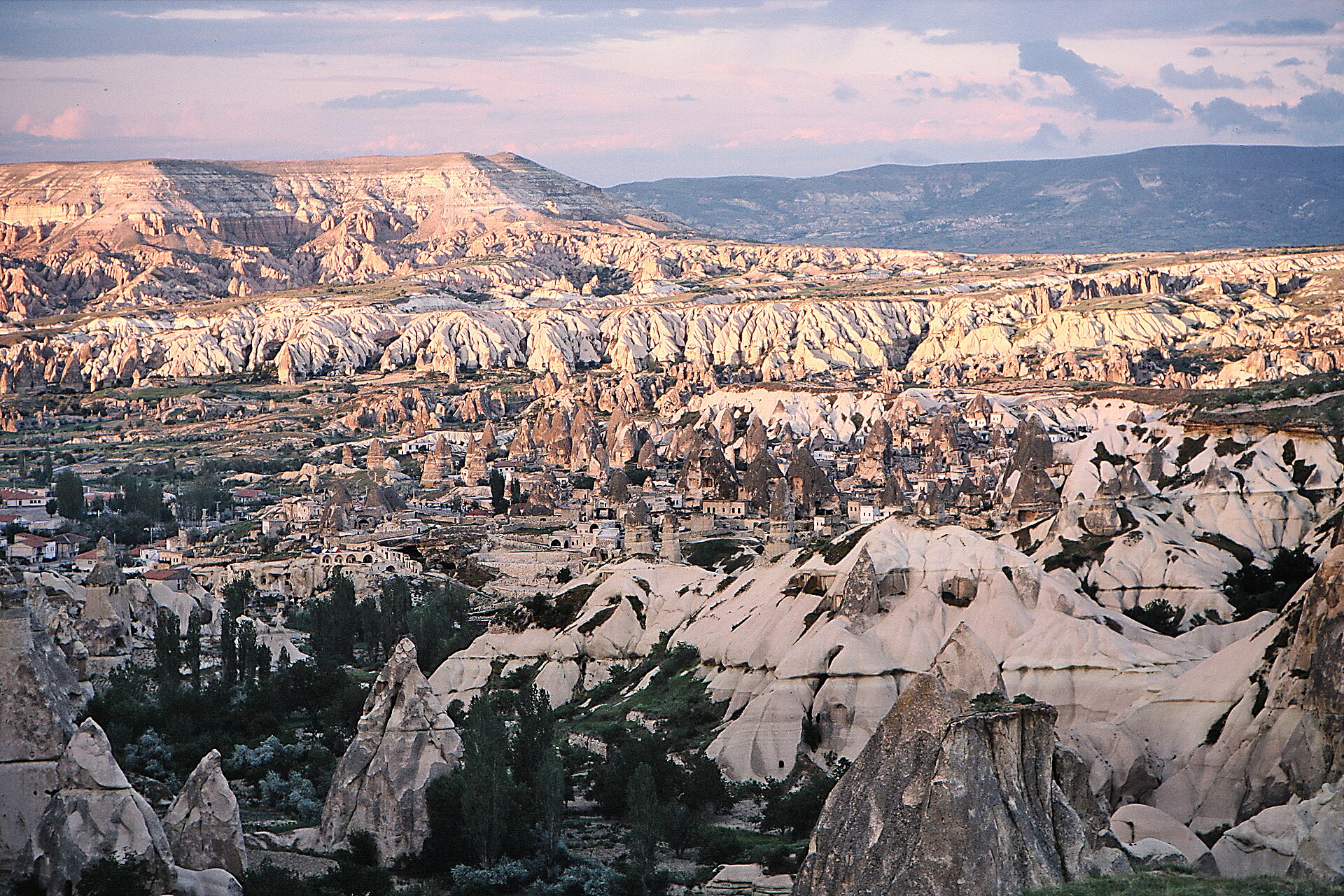
Build a journey with time for the destination.
Rock-cut churches and frescoes reveal a remarkable chapter of the region’s religious and artistic heritage.
The castle’s panorama and nearby valley paths provide contrasting ways to read the landscape.
Meet the pottery tradition in workshops and explore the town’s connection with the Kızılırmak River.
Underground settlement spaces reveal how communities organised daily life and shelter beneath the surface.
Stone mansions, town streets and the surrounding rock landscape offer a cultural counterpart to valley walks.
Watch the changing morning light over fairy chimneys; balloon operations depend on weather and authorised operators.
Discover the dishes and traditions that give the destination its own character.
Meat and vegetables slow-cooked in a sealed clay pot connect local cuisine with the region’s pottery tradition.
Apricots and meat come together in a regional stew with a distinctive sweet-and-savoury balance.
Filled dough parcels, yoghurt and sauce offer a local interpretation of a familiar Anatolian favourite.
Dried cream, molasses and the region’s vineyard culture add another dimension to breakfast and local tastings.
Valley terrain offers distinctive possibilities for running, walking, cycling and equestrian experiences on appropriate routes. It is especially suited to outdoor-focused trips; indoor and team programs need a separate facility assessment.
The terrain offers a distinctive setting for outdoor running and walking, from easier paths to demanding elevation changes. Match routes to ability, daylight and ground conditions; establish water, navigation and support arrangements before longer sessions.
Selected valley and countryside routes can combine sport with landscape discovery. Technical surfaces, visitor traffic and heritage protection require careful routing; equestrian programs should use suitable licensed operators and horses matched to rider experience.
Cappadocia is especially compelling for active holidays and endurance groups seeking a memorable environment. For football, swimming or indoor team camps, assess venue availability separately rather than assuming the tourism offer includes all training infrastructure.
Spring and autumn can offer a useful balance for long outdoor days. Summer needs shade and early starts; winter can bring icy ground. Build pottery visits and historic sites into recovery time, with balloon flights treated as weather-dependent optional experiences.
Anatolia’s planning assessment, based on the destination’s geography, climate and documented facilities. Venue availability and suitability are confirmed for each request.
Nevşehir has a continental climate, with cold winters and a dry late summer. The spring and autumn shoulder seasons can suit longer valley programs. Valley exposure, wind and shade vary considerably, so local conditions remain part of the route decision.
| Month | Average °C | Mean minimum °C | Mean maximum °C | Precipitation mm | Wet days |
|---|---|---|---|---|---|
| January | -0.1 | -3.6 | 4.0 | 45.4 | 12.31 |
| February | 0.9 | -2.6 | 5.5 | 41.1 | 12.10 |
| March | 5.0 | 0.7 | 10.3 | 48.1 | 13.09 |
| April | 10.2 | 5.1 | 16.0 | 50.2 | 12.49 |
| May | 14.5 | 8.9 | 20.6 | 57.9 | 12.93 |
| June | 18.3 | 11.7 | 24.9 | 37.5 | 8.10 |
| July | 21.4 | 13.7 | 28.5 | 9.4 | 2.30 |
| August | 21.3 | 13.6 | 28.7 | 8.4 | 1.72 |
| September | 17.3 | 10.5 | 24.5 | 14.3 | 3.42 |
| October | 12.1 | 6.8 | 18.3 | 28.0 | 6.99 |
| November | 6.7 | 2.5 | 11.8 | 34.3 | 8.54 |
| December | 2.1 | -1.3 | 6.2 | 48.4 | 12.27 |
Long-term observed averages, not a forecast. Precipitation includes rain and snow water equivalent; wet days are monthly averages. Mountain and coastal microclimates can differ from this station.
View the official MGM statistics ↗Share your sport, dates and service requirements. We will prepare a program around your group.
Tourism information is rewritten in original language using official references. Population figures refer to 2025; climate values show the stated measurement period. Checked on 6 October 2026.
Photos are used under their stated commercial-use licences. The photo licences apply to the photographs.